The 'calm' art of energy storage outdoor cabinets: air-cooled vs. liquid cooled, who is better?
In this era of booming green energy, the importance of energy storage technology as a bridge connecting renewable energy and stable power supply is becoming increasingly prominent. As a key component of energy storage systems, the heat dissipation performance of outdoor energy storage cabinets directly affects the operational efficiency and lifespan of the entire system. Today, we will conduct an in-depth analysis to explore the two major heat dissipation technologies in energy storage outdoor cabinets - air cooling and liquid cooling, and see how they each provide a "cool" guarantee for the energy storage system!
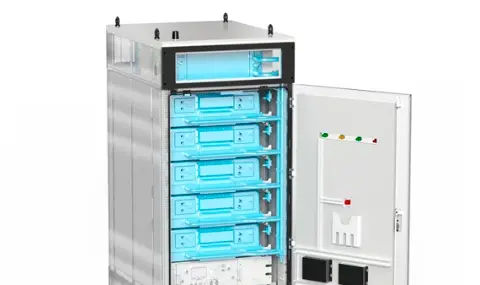
The following is a detailed comparison of these two heat dissipation methods:
1、 Air cooling technology
Advantages:
Simple structure and low cost: Air cooling technology removes heat from the surface of equipment through air flow, and its system structure is relatively simple with low manufacturing costs. Make air cooling technology economically advantageous, especially suitable for projects with limited budgets.
Mature technology and easy maintenance: Air cooling technology has been applied and verified for a long time, with a high level of technological maturity. Its maintenance is relatively simple, mainly focusing on routine operations such as cleaning and replacing the cooling fan.
Suitable for scenarios with low to medium power and low heat dissipation requirements: In energy storage outdoor cabinets, for energy storage devices with low to medium power and relatively low heat dissipation requirements, air-cooled heat dissipation technology can meet the basic heat dissipation needs and ensure stable operation of the equipment.
Due to the relatively low specific heat capacity and thermal conductivity of air, air cooling technology has limited heat dissipation efficiency and may be difficult to meet the stringent heat dissipation requirements of high-power and high-density energy storage devices. In addition, this technology is also constrained by environmental factors, including changes in ambient temperature and air circulation, especially under extreme weather conditions such as wind, sand, high humidity, etc., its heat dissipation effect will be weakened. Air cooling technology usually relies on fans to generate airflow, and the rotation of the fan will produce a certain amount of noise.
2、 Liquid cooling heat dissipation technology
Advantages:
High heat dissipation efficiency: Liquid cooling heat dissipation technology uses liquid as the heat conduction medium, and the heat conduction efficiency and specific heat capacity of liquid are much higher than those of air. Therefore, liquid cooling heat dissipation systems can more effectively absorb heat from the heat source and dissipate it to the external environment, providing higher heat dissipation efficiency.
Accurate temperature control: Liquid cooled cooling systems can achieve more precise temperature control, help prevent equipment from overheating, ensure it operates within a safe temperature range, and extend its service life.
Good temperature uniformity: Liquids can transfer heat more evenly, so liquid cooling systems can ensure a more uniform temperature distribution inside the equipment, improving the stability and reliability of the equipment.
Low noise: Compared to air-cooled cooling technology, liquid cooled cooling systems produce lower noise and are more suitable for places that require low-noise environments.
Strong compatibility: Liquid cooled cooling systems can adapt to various complex cooling requirements, especially for devices with high power density and compact design, enabling higher cooling performance in limited space.
The manufacturing cost, research and development cost, and design cost of liquid cooling systems are relatively high, requiring additional equipment such as water cooling tubes, water cooling boxes, and water cooling plates. And the system maintenance is relatively complex, requiring regular inspections and replacement of coolant.
Nanjing Guanlong Electric Power, as a leading enterprise in the field of new energy, has demonstrated strong innovation capabilities and product strength in photovoltaic PCS and system integration. The liquid cooled and air-cooled outdoor cabinets and ten foot and twenty foot container energy storage systems developed by the company not only have good environmental adaptability, but also provide flexible capacity expansion options to meet the personalized needs of different customers. These systems integrate advanced energy storage technology, control technology, and information technology to achieve efficient storage and intelligent scheduling of electrical energy,
Outdoor cabinet energy storage system, high-level protection, suitable for various extreme environments; High energy density of the system, saving land area; Integrated design, high system integration, built-in device level EMS, can monitor device status in real time; The design of outdoor cabinets can be flexibly combined and suitable for various application scenarios; Pre installed design, convenient transportation and installation, quickly shorten the construction period.